


















Why Chinese Food Additives Get Detained by FDA: 5 Compliance Gaps Exporters Must Close in 2026
If you supply food additives from China to the U.S. market, the margin between a smooth customs clearance and a red-list detention is often narrower than you think. FDA import alerts targeting Chinese food products have remained active throughout 2026, and “unsafe food additive” continues to rank among the leading causes of Detention Without Physical Examination (DWPE) .
The problem is rarely about product quality in the conventional sense. Many detained shipments met Chinese national standards. They failed because the additive was not authorized for use in the United States, or because the formulation contained a color or sweetener that FDA does not recognize as safe.
Here are the five compliance gaps that most frequently trigger FDA action, and what Bakechem does to help buyers avoid them.
Gap 1: Assuming Chinese Compliance Equals U.S. Compliance
This is the most expensive misconception in food additive export. A sweetener legal under GB 2760 may be an unapproved food additive under the FD&C Act. A colorant permitted in China or the EU may have no FDA listing at all.
In recent enforcement patterns, FDA has detained Chinese-origin candies and beverages for containing cyclamate (a sweetener not permitted in U.S. food) and unauthorized artificial colors including Ponceau 4R, which is approved in the EU but not in the U.S. . The shipment is not “bad product.” It is a standard-difference failure.
What to do: Before quoting any additive for a U.S.-bound customer, verify that the specific substance appears in FDA’s Food Additive Status List or is covered by a GRAS notification. If it does not, the formulation must be adjusted at the source—not at the port.
Gap 2: Underestimating Color Additive Scrutiny
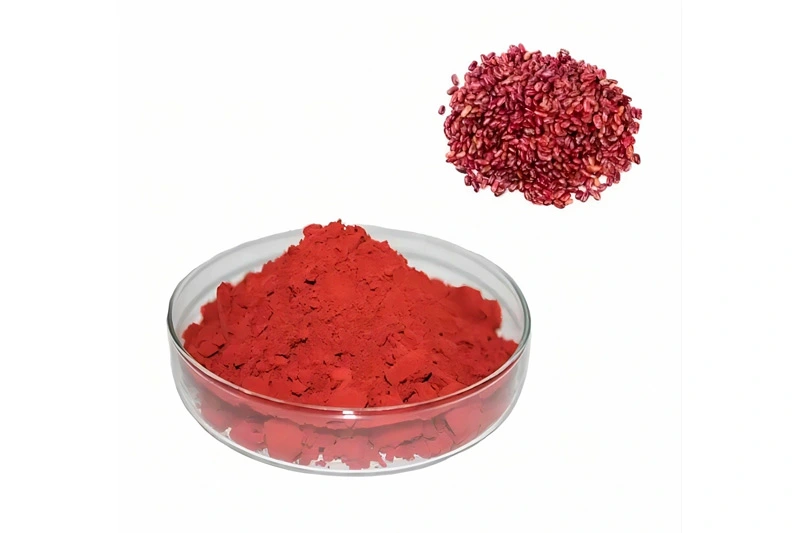
FDA treats color additives with particular severity. Under Import Alert 45-02, foods containing illegal or undeclared colors are subject to DWPE without physical examination . This means a single non-compliant colorant can place an entire product line under automatic detention.
The agency is also actively narrowing the synthetic color palette. FDA revoked authorization for FD&C Red No. 3 in food in 2025 and has signaled phased removal of several other petroleum-based colors . For exporters, this creates a moving target: a color that was compliant two years ago may no longer be.
What to do: For any product containing a colorant, confirm its current FDA status at the time of each shipment—not from a spec sheet saved on file. Where possible, qualify natural or exempt-from-certification alternatives with documented regulatory support.
Gap 3: Missing the “Unsafe Additive” Import Alert Scope
Import Alert 99-45 authorizes detention of food products that are or contain an unsafe food additive . The scope is broad: it covers not only intentionally added ingredients but also substances formed during processing, or additives that exceed permitted levels.
For Chinese exporters, this alert has been used in cases involving undeclared or unapproved additives in dietary supplements, confectionery, and beverage bases. The common thread is not adulteration in the traditional sense—it is a documentation and formulation gap that FDA identifies at entry.
What to do: Treat the import alert list as a living document. Before a new formulation is finalized, cross-check every functional ingredient against active alerts for the product category. Bakechem’s technical team maintains this check as part of the quotation process for U.S.-bound orders.
Gap 4: Labeling and E-Number Confusion
FDA does not recognize E-numbers on U.S. labels. A product labeled with “E260” instead of “acetic acid” or “E330” instead of “citric acid” can be deemed misbranded, even if the substance itself is permitted. Similarly, colors declared only by INS number or European designation may trigger sampling and detention .
What to do: For U.S. shipments, require label review against FDA’s common or usual name requirements. This is a low-cost step that prevents a high-cost hold.
Gap 5: Weak Supplier-Side Documentation
FDA detention is often triggered by the shipper’s inability to demonstrate that the additive is authorized. A certificate of analysis is not the same as a regulatory statement. What FDA reviewers look for is a clear link between the specific substance, its intended use level, and a citation to the applicable regulation or GRAS status.
What to do: Ask your supplier to provide, for each additive destined for the U.S., a one-page regulatory reference sheet: substance name, CAS number, FDA status (food additive regulation, GRAS, or prior sanctioned), permitted use conditions, and the regulation citation. Bakechem provides this documentation for key product lines on request.
How Bakechem Supports U.S.-Bound Shipments
Bakechem supplies acidulants, preservatives, sweeteners, and specialty ingredients to food and beverage manufacturers in more than 50 countries. For U.S.-destined orders, our process includes a pre-shipment regulatory screening against current FDA import alerts and food additive status listings. We do not claim to replace the importer’s compliance responsibility, but we do aim to eliminate the formulation-level surprises that cause most detentions.
If you are reformulating a product for the U.S. market or auditing an existing supply chain, contact us for a compliance-oriented product review.